When you try to manage your digital presence without a clear system, you inevitably hit a wall. Achieving social media without burnout is not about working harder; it is about stopping the habits that drain your energy for zero return.
Recent 2026 industry data shows that 68% of small business owners feel "digitally exhausted" by the constant need to create content for multiple platforms.
The first major trap is trying to be everywhere at once. If you are a local plumber, you do not need to be a "thought leader" on LinkedIn while simultaneously dancing on TikTok and posting aesthetic photos on Instagram.
The second trap is the "post-on-the-fly" method. This is when you realize at 4:00 PM that you haven't posted today, leading to a frantic 30-minute scramble to find a photo and write a caption. This daily anxiety is what causes the most stress.
Finally, many owners focus on vanity metrics. Getting 1,000 likes on a meme is useless if none of those people ever buy from you. Comparing your modest reach to a corporation with a 20-person social media team is a guaranteed way to feel like you are failing when you aren't.
The Golden Rule: Quality Over Quantity
The secret to a small business social media strategy that actually works is doing less, but doing it better. In 2026, algorithms have shifted to favor meaningful engagement over sheer volume.
You do not need to post every day to stay relevant. In fact, flooding your followers' feeds with low-effort content can actually hurt your brand's reputation and cause people to unfollow you.
How often should a small business post to avoid burnout? In 2026, the sweet spot for most small businesses is 2–3 high-quality posts per week. This maintains visibility without overwhelming the business owner or the audience.
Instead of spreading yourself thin, identify the one or two platforms where your customers actually hang out. If your target audience is professionals, stick to LinkedIn. If you sell visual products, focus on Instagram or Pinterest.
By narrowing your focus, you can spend your limited time creating content that actually provides value. Consistent, helpful content twice a week will always outperform mediocre content seven days a week.
How to Batch Your Content Like a Pro
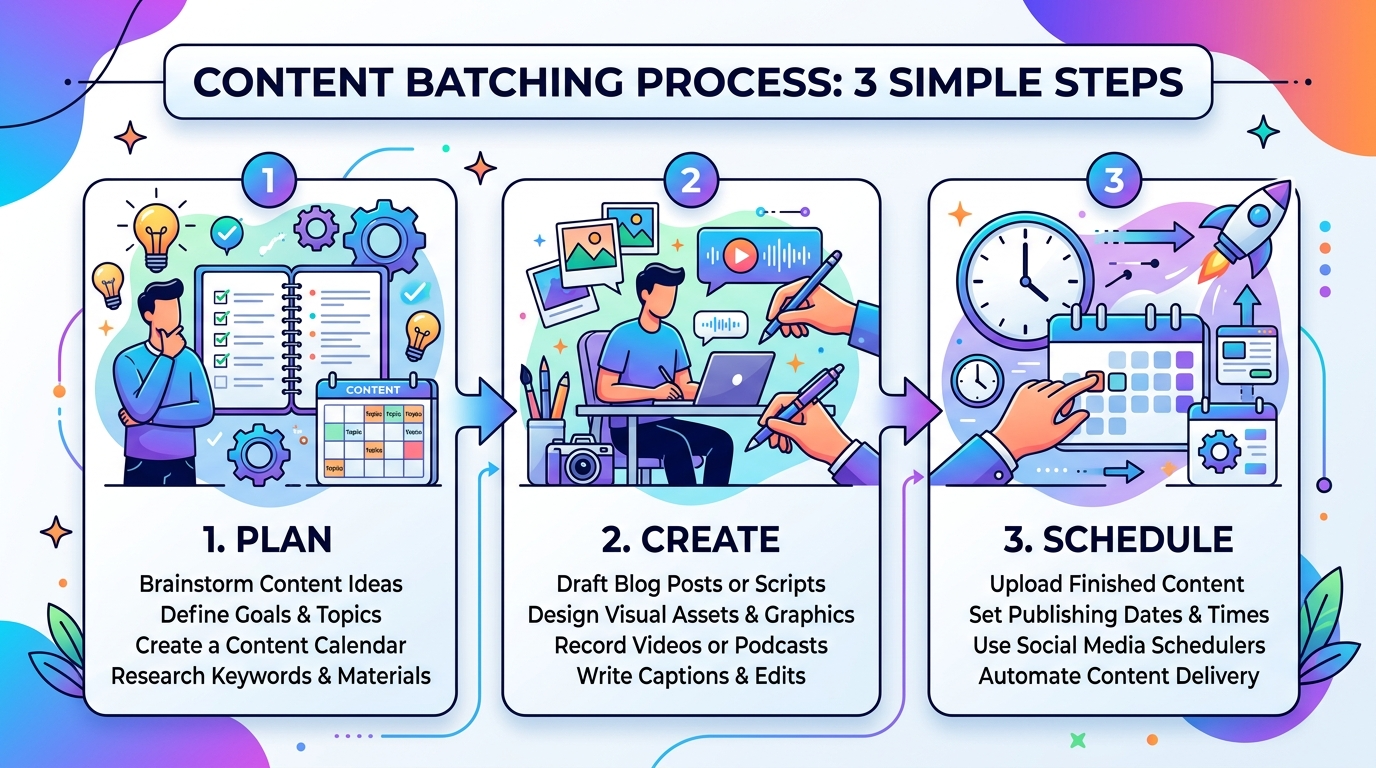
If you want to manage social media stress-free, you have to stop creating content every day. Content batching is the process of producing all your social media posts for the week or month in one single session.
Set aside one afternoon every month—perhaps the first Monday—to be your "Content Day." During these four hours, you draft your captions, select your images, and record any necessary video clips.
To make this easier, use the "One Idea, Three Ways" method. Take one customer question and turn it into a short video, a text-based graphic, and a detailed caption. This allows you to fill your calendar without needing a constant stream of new ideas.
Avoid trying to create "viral" content every time you sit down. Focus on being helpful and authentic; that is what builds long-term trust.
Don't forget to gather "B-roll" footage during your normal workday. Set up your phone on a tripod for 10 minutes while you work, pack an order, or talk to a client. These raw behind-the-scenes clips are incredibly popular in 2026 and require almost no editing.
Image: A calendar view showing "Content Batching Day" highlighted with scheduled posts for the month
Technology should be your assistant, not your master. A realistic social media plan relies heavily on automation to keep the wheels turning while you focus on running your actual business.
Use scheduling tools like Buffer, Later, or Metricool to "set it and forget it." Once your monthly batching session is done, upload everything to your scheduler. Now, your social media will run automatically for the next 30 days.
- Graphic Design: Use Canva or Adobe Express templates to keep your brand looking professional without needing a design degree.
- Caption Writing: Use AI tools to generate first drafts. You can provide a few bullet points, and the AI can format them into a readable caption with hashtags.
- Video Editing: Use simple apps like CapCut to add captions to your videos automatically, which is essential since most people watch with the sound off.
The most important part of social media automation for small business is setting boundaries. You do not need to respond to every comment the second it happens. Schedule 10 minutes at the end of your day to check notifications, and then close the apps.
Focusing on What Actually Grows Your Business
Social media is a top-of-funnel tool, not the entire funnel. Your goal should be to move people from a platform you don't own (like Instagram) to a platform you do own (like your website or email list).
Instead of chasing "likes," track meaningful conversions. How many people clicked the link in your bio? How many sent a direct message asking about your specialized services? These are the numbers that impact your bank account.
In 2026, Direct Messages (DMs) have become the primary way small businesses close sales. Use your public posts to start conversations, not just to broadcast advertisements.
Stop worrying about "beating the algorithm." The algorithm is simply a reflection of what people enjoy. If you focus on being genuinely helpful and answering the questions your customers actually ask, the algorithm will naturally find the right people for you.
Focus on building real relationships. Reply to comments with more than just an emoji. Ask your followers questions. When people feel like there is a real human behind the account, they are much more likely to become loyal customers.
Image: An infographic showing the path from a social media post to an email sign-up to a sale
Your 30-Day 'No-Burnout' Action Plan
Ready to reclaim your time? Follow this four-week content batching for beginners guide to reset your digital strategy and lower your stress levels.
Week 1: The Audit. Look at your current platforms. Which one brings you the most customers? Which one do you actually enjoy using? Delete the rest or put them on "maintenance mode" with a single post directing people to your main channel.
Week 2: The Calendar. Map out 8–10 post ideas for the next month. Focus on three themes: Educational (how-to tips), Personal (behind the scenes), and Promotional (what you sell). Write these down in a simple spreadsheet or on a physical calendar.
Week 3: The Batch. Block out four hours on your calendar. Create all the visuals and write all the captions for those 8–10 posts. Upload them to a scheduling tool so they are ready to go live automatically.
Week 4: Engagement & Review. Spend just 10 minutes a day responding to comments and DMs. At the end of the month, look at which posts got the most questions or clicks. Use that data to plan your next month.
How can I stay consistent if I hate being on camera?
You do not need to show your face to be successful. You can use "faceless" content like screen recordings of your process, high-quality photos with detailed captions, or text-based graphics that share tips. In 2026, authenticity matters more than being a "personality." If you prefer writing or photography, lean into those strengths instead of forcing yourself to be on camera.
Should I use paid ads to reduce my content workload?
Yes, paid ads can be a great way to maintain a small business social media strategy without needing to post constantly. A small "boost" on your best-performing organic posts can keep them in front of new customers for weeks. This allows you to focus on creating fewer, higher-quality pieces of content while the paid promotion handles the reach.
Consider outsourcing when the time you spend on social media is preventing you from doing work that generates more revenue. If you are spending 10 hours a week on Instagram but your time is worth $100/hour, you are effectively spending $1,000 a week. At that point, it makes more financial sense to hire a professional agency or a freelance manager to take it off your plate.
Managing your online presence shouldn't feel like a second full-time job. If you are tired of the constant grind and want a strategy that actually converts followers into customers, we can help.
Stop the burnout today. Book a free 15-minute audit call with the CodeRift Agency team, and let's build a sustainable plan for your business growth.